
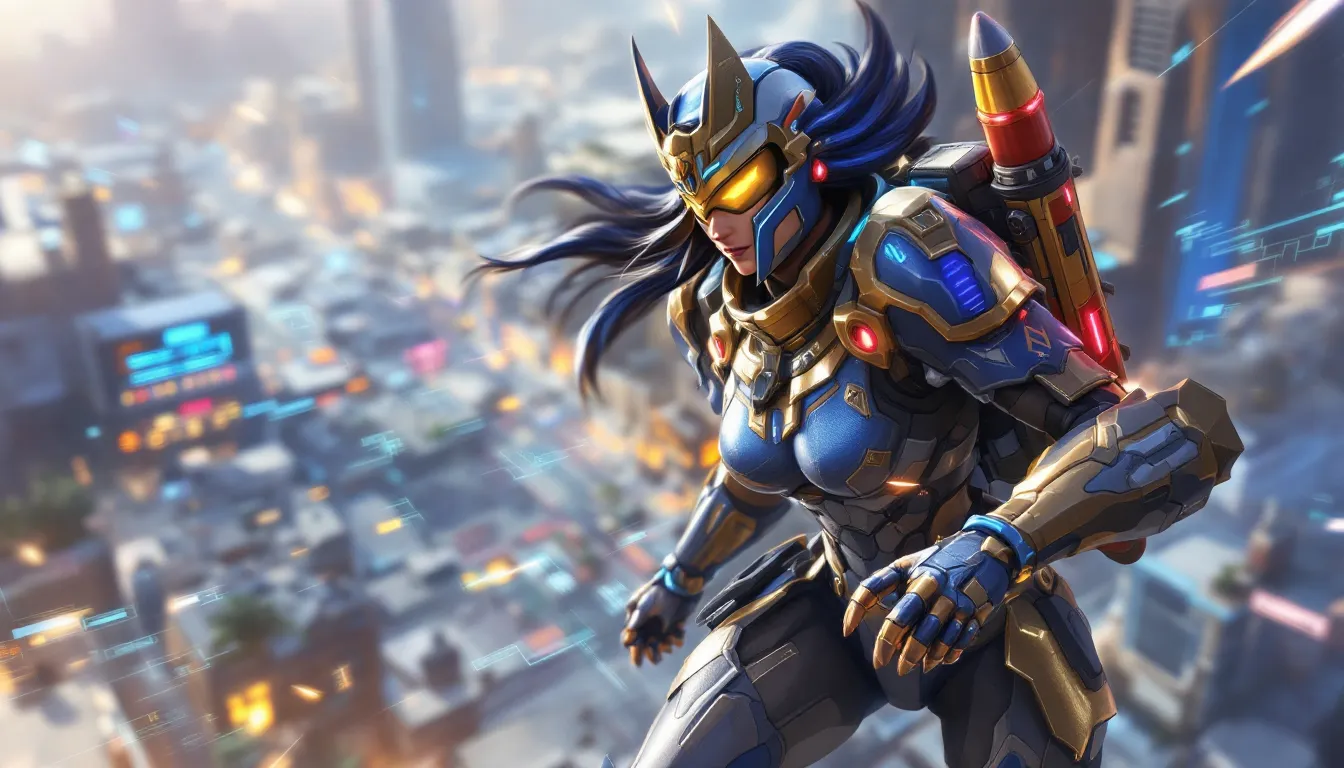
Pharah is one of Overwatch‘s most iconic and rewarding heroes to master, and for good reason. Her vertical mobility, explosive damage output, and high-risk, high-reward playstyle make her a terror in the right hands. Whether you’re climbing competitive ranks or just looking to dominate in casual matches, understanding how to pilot Pharah effectively separates mediocre players from ones who consistently carry games. This guide covers everything from her core mechanics to advanced positioning strategies, competitive meta insights, and matchup knowledge you’ll need to become a Pharah specialist in 2026.
Table of Contents
ToggleKey Takeaways
- Master Pharah’s jet pack mobility and high-ground positioning to control vertical space and dominate maps where enemies lack hitscan counters like Widowmaker or Soldier: 76.
- Focus on splash damage optimization over direct hits—aiming at feet and grouped targets maximizes cumulative damage output and eliminates the need for pixel-perfect aim.
- Pharah counters immobile heroes like Reinhardt and Mercy but requires careful positioning and fuel management to avoid getting picked off by skilled hitscan enemies.
- Ultimate economy and team synergy are critical—coordinate Barrage timing with team engages and support abilities (Ana sleep, Zarya bubbles) to multiply effectiveness in competitive play.
- Consistent practice through deathmatch aim training, VOD review, and studying professional Pharah specialists separates casual players from high-rank specialists who leverage her massive skill ceiling.
Who Is Pharah and Why She Matters in Overwatch
Pharah Amari is a powerhouse damage hero with one of the highest skill ceilings in Overwatch. She’s a rocket-firing, jet-pack-equipped soldier who thrives by controlling vertical space and raining explosive death from above. Her importance in the game can’t be overstated: she punishes immobile targets, dominates open maps, and forces enemy teams to dedicate resources toward shutting her down.
Pharah’s appeal lies in her ability to create chaos. Unlike hitscan heroes who rely on precise aim at head level, Pharah uses splash damage to turn the tide of fights. A well-placed salvo can eliminate squishy targets or chunk tanks for significant burst damage. Teams that lack proper counters or awareness often crumble when Pharah seizes high ground control.
Historically, fanart and community content in general have kept Pharah as one of the community’s most beloved characters. Her design, Egyptian heritage, military background, and striking armor, resonates across the playerbase. But beyond aesthetics, her gameplay is fundamentally satisfying: landing consecutive airshots or executing a multi-kill ultimate feels incredible. In competitive play, a skilled Pharah can single-handedly win maps, especially in coordinated team environments where she receives proper support from her squad.
Pharah’s Role and Abilities
Pharah operates as a Damage hero, but she’s distinctly different from the hitscan DPS roster. Her kit revolves around mobility, area denial, and burst damage from unconventional angles. Understanding her four core abilities is essential to maximizing her potential.
Jet Pack Mechanics and Mobility
The Jet Pack is Pharah’s defining mechanic. This ability lets her ascend and sustain flight for several seconds, consuming fuel that regenerates when grounded. The skill ceiling here is massive: knowing how high to climb, when to retreat to cover, and how long to stay airborne before enemy hitscan heroes shut you down separates novice Pharahs from serious threats.
Fuel management is critical. You can’t stay in the air indefinitely, and enemy hitscan heroes, especially Widowmaker, Ashe, and S76, will hunt you relentlessly if you’re airborne too long. Smart Pharahs use short bursts to peek angles, unleash rockets, then dip back behind cover. Staying at mid-range altitude gives enemies fewer angles to shoot while keeping you in optimal rocket distance.
Rocket Launcher and Damage Output
Pharah’s Rocket Launcher fires in a straight line with inherent splash damage. This is her primary damage tool and where most of her kill potential resides. Each rocket deals 120 damage on direct hit, 60 damage from splash at maximum radius. The splash falloff is forgiving, you don’t need pixel-perfect aim to threaten enemies.
Rocket velocity matters too. Her projectiles travel faster than heroes like Junkrat, meaning landing hits at range is more consistent. The magazine holds 6 rockets before reload, so burst potential against grouped targets is substantial. A single salvo can eliminate most squishies or force tanks to back off. Understanding damage thresholds helps: Tracer (125 HP) dies to one rocket, Mercy (200 HP) to two, Reinhardt (500 HP) takes consistent damage but survives several. Splash radius extends roughly 8 meters, so even near-misses contribute damage.
Hover Ability and Positioning
The Hover ability locks Pharah in place while airborne, letting her strafe and hold a single angle indefinitely as long as fuel permits. This is where positioning separates careless players from tactical ones. Hovering on high ground with cover nearby lets you spam enemies from a position they can’t easily reach. Enemies below have limited vertical angles on you, while you have perfect sightlines on them.
Hover positioning is most effective on maps with distinct height variations, think Ilios Well, Lijiang Tower, or the raised platforms on King’s Row. But, hovering in open, exposed spots is a death sentence against competent enemy hitscan. Always have an escape plan: a nearby wall, pillar, or lower ground to jet pack toward if you’re being tracked.
Mastering Pharah’s Playstyle and Positioning
Pharah’s effectiveness hinges entirely on positioning. You can have perfect aim, but poor positioning gets you deleted. Conversely, stellar positioning makes even mediocre aim farm eliminations.
High Ground Advantage and Map Control
High ground is oxygen to Pharah players. Whenever possible, position yourself 5-10 meters above the enemy team. This grants several advantages: enemies struggle to return fire, your splash radius is maximized against grouped targets below, and your jet pack escape route is faster and safer than enemies can pursue.
On maps like Watchpoint Gibraltar, the high ground positions above the choke point are literal game-winners if Pharah controls them. On Route 66, the elevated rocks near point allow Pharah to dominate the space. Temple of Anubis has multiple high platforms perfect for Pharah to hold early space.
But, high ground isn’t a blanket solution. If the enemy team has a competent Widowmaker or S76, sitting static on high ground predictably gets you sniped. Mixing in movement, unpredictable hover positions, and rapid repositioning keeps enemies from establishing a bead on you. The goal is to contest high ground while remaining mobile enough to punish enemies who don’t respect your presence.
Vertical Movement Strategies
Vertical movement separates Pharah players grinding placements from those climbing to high ranks. The jet pack’s acceleration and deceleration create exploitable movement tech. By timing jet pack bursts, you can bait enemy shots, dodge incoming ultimates, and juke predictive hitscan fire.
One core technique: half-jumping. Tap jump, then immediately use jet pack to gain height faster than holding jump alone. This lets you peek angles quickly, confirm enemies, then descend back to cover before hitscan heroes acquire you. Another: strafe jumping while airborne, constant lateral movement with occasional vertical adjustments makes you incredibly difficult to track. Enemy hitscan heroes will waste ammunition trying to lead you properly.
During team fights, avoid hovering at predictable heights. Ascend and descend in irregular patterns. Weave around architecture rather than flying in straight lines across open space. The enemy team looking for the Pharah pick is the enemy team not pressing your tanks and supports, so even drawing enemy focus without dying is valuable.
Pharah Matchups: Counters and Advantages
Pharah has clear strengths and glaring weaknesses depending on enemy composition. Understanding matchup dynamics helps you identify when Pharah is the right pick versus when you should swap.
Heroes That Counter Pharah
Widowmaker is Pharah’s hardest counter. A skilled Widowmaker tracks airborne Pharahs with ease, and her 120 damage body shot or 300 damage headshot deletes Pharah before escape is viable. Playing into Widowmaker forces Pharah to stay low, limiting her effectiveness and putting her in effective range of enemy hitscan and positioning.
Soldier: 76 presents constant pressure. His hitscan weapon, self-healing, and vertical mobility allow him to brawl Pharah at medium range while healing off rocket splash. S76’s tracking damage is especially punishing if you hover predictably.
Ashe is a mid-range threat. Her fast projectile, headshot damage, and sleep dart force Pharah into precarious positioning. One bad hover leaves you vulnerable to sleep, which usually ends in an elimination from follow-up damage.
Zenyatta deserves mention: harmony orb keeps allied heroes alive against Pharah’s burst, while discord orb makes Pharah’s large hitbox a liability. A discorded Pharah often dies in 2-3 well-placed hitscan shots.
Cassidy (formerly McCree) is annoying but not insurmountable. His fan-the-hammer combo and stun can catch low-hovering Pharahs. But, Pharah’s air superiority usually wins the matchup if you maintain altitude.
Heroes That Pharah Counters
Tracer is Pharah’s easiest matchup. Tracer’s limited range and fast-moving profile make her hard for Pharah to hit, but a single well-placed splash or direct hit likely eliminates her (125 HP is fragile). Pharah’s raw damage output outclasses Tracer’s consistent but lower DPS.
Reinhardt struggles against Pharah. He can’t shield vertically against rockets, and his hammer range doesn’t threaten airborne Pharahs. Bombarding Reinhardt with splash forces him back or punches through his shield into his team.
Mercy is vulnerable, especially if she’s alone. Her low damage output and limited defensive abilities mean Pharah can pressure her constantly. Two rockets and Mercy is dead.
Bastion (in stationary mode) is forced to reposition whenever Pharah appears. Pharah’s splash radius makes dodging rockets difficult for stationary targets. But, Bastion in sentry mode trades even with airborne Pharahs, so it’s not a guaranteed win.
Symmetra struggles against Pharah at range. Pharah’s superior positioning and damage force Symmetra into awkward angles. The teleporter denial Pharah provides, simply threatening it, removes one of Symmetra’s key survival tools.
Note: matchups shift with patches and meta changes. Staying informed on balance shifts can affect these dynamics.
Advanced Tips for Improving Your Pharah Game
Once you’ve nailed basic positioning and matchup knowledge, advancing requires focus on mechanical refinement and higher-order game sense.
Aim and Splash Damage Optimization
Pharah’s splash radius is forgiving, but understanding its exact geometry optimizes your damage output. The splash radius extends roughly 8 meters from impact. Rather than hunting direct hits (which are inconsistent), positioning yourself to splash multiple enemies maximizes your damage efficiency.
Against grouped targets, aim for feet or nearby ground rather than bodies. Direct hits feel satisfying, but splash damage hitting multiple enemies is exponentially more valuable. One rocket splashing three enemies deals more cumulative damage than three separate direct hits on one target.
Aim training in deathmatch modes is your friend. Spend 20-30 minutes weekly in high-ping duels focusing purely on rocket speed and projectile prediction. You’ll naturally improve tracking, leading, and timing. Recording and reviewing your gameplay reveals aim habits: Are you leading targets too far? Undershooting? Panicking and missing easy shots?
Another mechanical element: prefire. If you know an enemy is around a corner, fire a rocket at the predicted angle before they appear. Smart prefire turns fights into your favor instantly. This requires map knowledge and understanding enemy positioning patterns, but the dividends are immense.
Ultimate Economy and Team Synergy
Barrage, Pharah’s ultimate, is one of the most powerful ults in the game, firing 40 rockets in rapid succession with guaranteed splash. But, it’s also vulnerable: Pharah ascends during activation, telegraphing the ult and leaving her exposed. Smart ultimate usage is critical.
Optimal Barrage timing coincides with your team engaging. If your reinhardt just charged into the enemy team, enemies are grouped and distracted. That’s when Barrage is most effective. Conversely, ulting into a spread-out, defensive enemy formation wastes it.
Building Barrage efficiently requires consistent damage output. Each rocket hit and splash damage feed ult charge. Playing methodically rather than brawling recklessly accumulates charge faster. Focusing squishy targets (supports, damage heroes) rather than spamming Reinhardt’s shield accelerates Barrage availability.
Team synergy multiplies Pharah’s impact. A coordinated team with Ana sleep support, Zarya bubbles, or Lucio speedboost amplifies Pharah’s effectiveness immensely. Conversely, a disorganized team leaving Pharah isolated gets picked off. Communication, callouts on enemy positions, when you’re grouping, when you’re getting sniped, keeps everyone on the same page.
Understanding your team’s ultimate economy also matters. If your Zarya has grav, grouping enemies for grav->Barrage combo is devastating. If your Ana has nap, coordinating a play where Ana sleeps the Widowmaker removes the counter long enough for Pharah to establish control.
Pharah in Competitive Play and Meta Shifts
Pharah’s viability in competitive play fluctuates with balance patches and meta evolution. Understanding her current position and historical trends informs your decision to main her versus flex to other heroes.
Current Meta Positioning for Pharah
As of 2026, Pharah occupies an interesting spot. She’s not universally meta, but on specific maps and against certain compositions, she’s a top-tier pick. Maps like Ilios, Lijiang Tower, Nepal, and Watchpoint Gibraltar favor her vertical dominance. Maps like Numbani and King’s Row are coin-flip depending on team composition.
The current meta heavily features long-range hitscan heroes and defensive ultimates that counter Pharah’s aggressive playstyle. But, if enemy team lacks Widowmaker or S76, Pharah becomes significantly more viable. Smart teams recognize Pharah threats and draft accordingly, if the enemy instalocks Pharah, running Widowmaker is nearly mandatory.
Pharah’s viability also depends on your team’s support structure. With a pocket Mercy (which is less common in 2026 meta), Pharah becomes significantly more durable and threatening. Without it, she’s more vulnerable and relies on superior positioning and movement to survive.
Staying informed on patch notes and professional meta evolution ensures you’re not grinding with outdated strategies. A single Pharah damage adjustment or hitscan buff can shift her viability dramatically.
Professional Play Insights
Professional Overwatch players demonstrate Pharah’s potential at the absolute highest level. Teams with dedicated Pharah specialists, players who’ve invested thousands of hours perfecting her, leverage her to devastating effect, especially on high-ground favorable maps.
Pro Pharahs demonstrate mechanical excellence that separates them from ladder players: consistent splash placement, predictive movement that dodges incoming fire, and ultimate usage synchronized with team coordination. Watching professional matches reveals subtle positioning techniques, hover angles, and repositioning patterns most ladder players never consider.
But, professional play also reveals Pharah’s vulnerabilities. Competent enemy hitscans shut down careless Pharahs instantly. The skill disparity between mediocre and excellent Pharah players is enormous. This creates a paradox: Pharah is simultaneously one of the most rewarding heroes to master and one of the most punishing when misplayed.
For competitive grinders, the insight is this: Pharah’s effectiveness scales dramatically with mechanical skill and game sense. Investing in her improvement pays dividends at higher ranks. But, below a certain skill threshold, more traditional hitscan heroes may yield faster climbing due to their lower learning curve. Studying professional gameplay from exceptional Pharah specialists is invaluable if you’re serious about mastery.
Conclusion: Becoming a Pharah Specialist
Mastering Pharah is a long-term commitment, but the payoff is substantial. She’s one of Overwatch’s most satisfying heroes, rocket airshots, clutch Barrage eliminations, and dominating maps from high ground creates moments that stick with you. The journey from casual Pharah to specialist requires deliberate practice: mechanics work, positioning study, VOD review, and thousands of hours of gameplay.
Start with solid fundamentals: respect sightlines, maintain high-ground advantage, manage your jet pack fuel, and understand your matchups. From there, layer in advanced techniques: prefire, movement tech, ultimate economy, and team coordination. Each element compounds your effectiveness exponentially.
The meta will shift. New heroes will release. Balance patches will tweak Pharah’s numbers. But the core principles, vertical dominance, splash damage efficiency, and positional awareness, remain constant. Internalize these foundations, and you’ll adapt to whatever changes come.
Whether you’re a casual player looking for a fun hero or a competitive grind seeking to climb ranks, Pharah rewards dedication. Pick her up, invest in improvement, and watch your impact multiply. The skies of Overwatch await.