
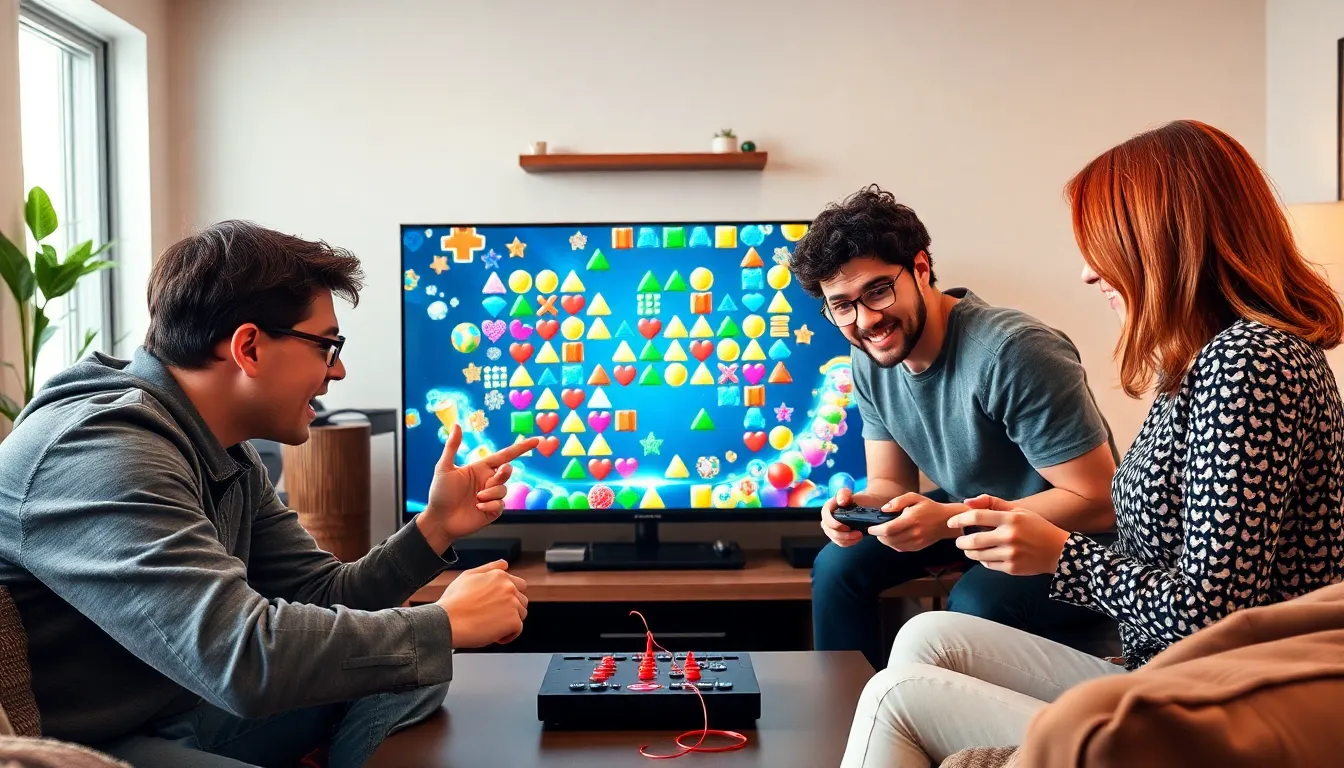
In a world where solo gaming can feel like a solitary confinement sentence, multi-player puzzle modes swoop in like a superhero with a cape made of brain teasers. These modes turn the typical “me against the world” mentality into a collaborative quest for glory. Imagine teaming up with friends or facing off against rivals, all while solving mind-bending challenges that keep everyone on their toes.
Whether it’s a race against the clock or a battle of wits, multi-player puzzle modes deliver a delightful mix of competition and camaraderie. They bring people together, proving that two (or more) heads really are better than one. So grab your friends, dust off your thinking caps, and dive into a world where puzzles spark laughter, teamwork, and maybe even a little friendly rivalry. Who knew brain workouts could be this much fun?
Table of Contents
ToggleOverview of Multi-Player Puzzle Modes
Multi-player puzzle modes engage players in various ways, turning individual challenges into shared experiences. Collaboration often leads to new strategies, enhancing problem-solving skills across the board. Competing against friends or other players introduces an exciting dynamic that fuels motivation. Many games feature leaderboard systems that track performance, adding an element of rivalry.
Games can offer cooperative or competitive styles, allowing players to choose their preferred method of interaction. Team-based challenges sometimes require brainstorming and communication to solve complex puzzles together. Likewise, timed challenges frequently raise the stakes, propelling players to think quickly under pressure.
Several games stand out in the multi-player puzzle genre. Titles like “Portal 2” emphasize teamwork with unique mechanics, while “Overcooked!” brings time management and coordination to the forefront. These games demonstrate the depth available in multiplayer formats and offer diverse experiences for various player preferences.
Social elements also play a crucial role. Players often form communities around their favorite puzzle games, sharing tips and strategies. This interaction enhances the overall experience, creating lasting connections and friendships among participants.
The blend of competition and cooperation in multi-player puzzle modes cultivates engaging environments for all involved. Many players discover that these modes offer more than just entertainment; they create opportunities for developing close-knit bonds while having fun.
Popular Multi-Player Puzzle Games
Multi-player puzzle games create exciting environments where collaboration and competition thrive. Numerous titles capture the essence of teamwork and challenge, appealing to diverse gaming preferences.
Game One: Overview and Features
Portal 2 combines platforming and puzzles in an innovative narrative-driven design. Players utilize a portal gun to solve spatial challenges that can be tackled solo or with friends. Cooperative gameplay involves teamwork as players navigate complex puzzles together. Unique mechanics, like shared portals, enhance collaboration while allowing for creative problem-solving. Engaging characters and humor punctuate the experience, making it a standout in multi-player puzzle gaming.
Game Two: Overview and Features
Overcooked! transforms cooking into a frantic, fun-filled challenge for multiple players. Teams work together to prepare meals in chaotic kitchens filled with obstacles. Each level requires communication and coordination to efficiently serve dishes under time constraints. Players enjoy unique environments, from busy restaurants to whimsical kitchens, adding variety to the experience. The game’s charm lies in its ability to turn teamwork into a hilarious adventure.
Game Three: Overview and Features
Keep Talking and Nobody Explodes presents a unique twist on collaborative puzzling, focusing on communication. One player defuses a bomb while others rely on a printed manual to guide them. This game emphasizes verbal skills and clear dialogue, enhancing the team’s effectiveness under pressure. Dynamic scenarios keep players engaged, as each bomb features different puzzles and complexities. The necessity for teamwork combined with real-time problem-solving makes this game a thrilling experience.
Gameplay Mechanics in Multi-Player Puzzle Modes
Multi-player puzzle modes incorporate unique mechanics that enhance player experiences through cooperation and competition.
Cooperative Gameplay
Cooperative gameplay encourages players to collaborate on complex puzzles. Teams must communicate effectively to develop strategies and solve challenges collectively. Various tasks require individuals to specialize in different activities while supporting one another. For instance, in “Portal 2,” players utilize the portal gun to solve intricate spatial problems together. Success often hinges on coordination and teamwork, with players discussing their moves and timing to optimize outcomes. Shared victory fosters a sense of achievement, reinforcing friendships and generating a supportive gaming atmosphere. Each step taken as a unit enhances problem-solving skills and creates memorable moments of collaboration.
Competitive Gameplay
Competitive gameplay introduces an exhilarating dimension to puzzle-solving. Players face off against one another, striving to complete tasks faster or more efficiently to claim victory. Fast-paced environments, such as those seen in “Overcooked!”, demand quick thinking and decision-making under pressure. Timed challenges intensify the experience, pushing players to find solutions swiftly. Leaderboards track performance, motivating participants to improve their skills and climb rankings. Unique mechanics, like sabotage or interference, add layers of strategy, making each competition dynamic and unpredictable. Ultimately, competitive gameplay fosters a thrilling atmosphere where players experience adrenaline and excitement while navigating intricate puzzles.
Benefits of Multi-Player Puzzle Modes
Multi-player puzzle modes enrich the gaming experience by fostering interaction and enhancing cognitive development. Players enjoy more than just entertainment; they gain opportunities for social bonding and skill improvement.
Social Interaction
Social interaction stands at the forefront of multi-player puzzle modes. Players frequently collaborate with friends, family, or even strangers to tackle challenges. Each session promotes communication, strengthening relationships as players share strategies. Engaging in problem-solving together allows for the exchange of ideas, which leads to mutual understanding and teamwork. Additionally, friendly competition within these modes sparks lively conversations and creates memorable moments. Interaction through leaderboards and shared achievements also cultivates a sense of community, bringing players together beyond the game itself.
Cognitive Skills Development
Cognitive skills development plays a significant role in the appeal of multi-player puzzle modes. Players regularly enhance critical thinking and problem-solving abilities while navigating complex puzzles. Every unique challenge encourages creativity as individuals explore various approaches. Successful collaboration requires effective communication, pushing players to articulate ideas clearly. Timed challenges add urgency, forcing players to make quick decisions under pressure, which boosts mental acuity. Engaging with complex mechanics further cultivates strategic thinking and adaptability. Players not only enjoy a fulfilling gaming experience but also foster valuable skills that extend beyond the virtual realm.
Challenges in Multi-Player Puzzle Modes
Multi-player puzzle modes face several challenges that impact gameplay dynamics. These challenges require careful consideration to enhance the overall experience.
Balancing Difficulty
Balancing difficulty remains a significant factor in multi-player puzzle modes. Developers must ensure puzzles aren’t too easy or too hard, as either extreme may lead to frustration or boredom. Players with different skill levels often engage, so scaling challenges facilitates inclusivity. Metrics like average completion times and success rates inform adjustments. Adjustments based on player feedback can create more enjoyable experiences. Real-time difficulty scaling not only keeps players engaged, but it also fosters teamwork. Each group is likely to face unique puzzle-solving experiences when challenges are finely tuned.
Player Communication
Effective player communication significantly influences success in multi-player puzzle modes. Players rely on clear dialogue to share insights and strategies, as collaboration often determines puzzle outcomes. Games like “Keep Talking and Nobody Explodes” emphasize this aspect, requiring players to relay complex information quickly. Poor communication leads to misunderstandings, which could derail progress. Tools like in-game voice chat or messaging systems support real-time strategy discussions. Success hinges on the team’s ability to articulate their thoughts and coordinate efforts. Ensuring everyone participates fosters a shared sense of accomplishment and enhances the enjoyment of collaborative problem-solving.
Multi-player puzzle modes offer a unique blend of collaboration and competition that enriches the gaming experience. They transform solitary challenges into shared adventures that foster teamwork and communication. Players not only enhance their problem-solving abilities but also build lasting connections through shared victories and friendly rivalries.
The excitement of tackling puzzles together or racing against each other creates an engaging atmosphere that appeals to diverse gaming preferences. As developers continue to refine these modes, the potential for deeper social interactions and cognitive growth remains vast. Multi-player puzzle games stand out as a dynamic way to connect with others while enjoying stimulating gameplay.